

Imagine this: Your customer service team handles hundreds of interactions daily, but you’re flying blind. You think your customers are happy, but your churn rate keeps climbing. Sound familiar? You’re not alone.
A staggering 54% of consumers say most companies need to improve their customer service. The missing link? Customer Satisfaction Score (CSAT), a simple yet powerful metric that reveals exactly how your customers feel.
Customer Satisfaction Score (CSAT) is a vital metric used by organizations to gauge customer sentiment and enhance service quality. In call centers and customer-facing teams, CSAT delivers essential insights into performance and helps identify both strengths and areas needing improvement.
In this guide, you’ll learn:
- What Is CSAT?
- Pros & Cons Of CSAT In Call Centers
- The Difference Between CSAT & Other Customer Satisfaction Metrics
- How To Measure & Calculate CSAT?
- Best Practices When Implementing CSAT In a Call Center
- What Is Considered a Good CSAT Score?
What Is CSAT? (And Why It’s More Than Just a Number)
CSAT, short for Customer Satisfaction Score, is a key performance indicator that tracks how satisfied customers are with an organization’s products and/or services. Unlike other customer experience metrics, CSAT specifically targets the “here and now” reaction to a specific interaction, product, or event. This makes it particularly valuable for call centers and customer service teams who need immediate feedback on individual customer interactions.
Asking general service-related questions, such as “On a scale of 1 to 5, how satisfied are you with our product/service?” can be an effective way to gather immediate feedback from customers. Additionally, specific questions like “How satisfied are you with the speed of service?” or “How satisfied are you with the communication from our company?” can provide valuable insights into particular areas of the customer experience.
CSAT serves as a direct indicator of customer happiness and provides insight into the effectiveness of company offerings and service delivery. For customer-facing teams, this metric offers a straightforward way to gauge customer reactions after interactions, whether through phone calls, chat sessions, or email exchanges. The immediacy of CSAT feedback allows teams to quickly identify issues and make necessary adjustments to improve the customer experience.
Understanding CSAT is essential for any customer service operation because it directly correlates with customer retention and loyalty. When customers are satisfied with their service interactions, they are more likely to continue doing business with the organization and recommend it to others. Conversely, low CSAT scores can signal potential issues that, if left unaddressed, might lead to customer churn and negative word-of-mouth.
Advantages and Limitations of CSAT for Call Centers
Pros of Using CSAT
CSAT offers several advantages that make it particularly valuable for call centers and customer service operations:
- Simplicity: CSAT surveys are short and straightforward, making them easy for customers to complete and for teams to implement. This simplicity contributes to higher response rates compared to more complex feedback mechanisms.
- Flexibility: The rating scale can vary based on the context, giving you the flexibility to use what works best for your audience (e.g., stars, emojis, or numeric rating scales). This adaptability allows call centers to tailor their approach to their specific customer base.
- High response rates: Because CSAT surveys typically contain few questions, they tend to generate higher response rates than more time-consuming feedback methods. More responses, means more representative data, and better insights.
- Actionable insights: CSAT provides specific feedback about particular interactions or experiences, making it easier to identify and address potential issues. Helping managers to target improvement efforts where they are most needed.
- Versatility: In call centers, CSAT can be tailored to evaluate various aspects of the customer experience, from overall satisfaction to specific elements like wait times or agent behavior. This versatility allows teams to gather feedback on the aspects that matter most.
Cons and Limitations
Despite its benefits, CSAT has a few limitations that call centers should be aware of:
- Response bias: The vast majority of customers do not complete satisfaction surveys, which can skew results and limit accuracy. Those who do respond might have stronger opinions (either positive or negative) than the average customer.
- Short-term focus: CSAT primarily reflects immediate reactions rather than long-term customer relationships or loyalty. This limitation means that CSAT alone may not provide a complete picture of customer sentiment over time.
The Difference Between CSAT and Other Customer Satisfaction Metrics
CSAT measures customer satisfaction with a product or service, whereas others focus on measuring customer loyalty to the organization. This distinction is crucial for customer service teams to understand.
While CSAT provides feedback about specific interactions or products, metrics such as NPS offers a broader view of the customer’s relationship with the company and their likelihood to recommend it. CSAT focuses on immediate reactions to specific touchpoints, but it may have limitations when it comes to measuring a customer’s ongoing relationship with a company. For this reason, many organizations use CSAT alongside other metrics like NPS or Customer Effort Score (CES) to gain a more comprehensive understanding of the customer experience across different dimensions and timeframes.
| Metric | What It Measures | Typical Question | Scale | Best For |
| CSAT | Satisfaction with a specific interaction | “How satisfied were you with your experience today?” | 1–5 (or emoticons) | Immediate feedback after support calls, purchases |
| NPS | Overall loyalty & likelihood to recommend | “How likely are you to recommend us?” | 0–10 | Long-term customer relationships |
| CES | Effort required to resolve an issue | “How easy was it to solve your problem?” | 1–7 | Reducing friction in support processes |
How CSAT is Measured and Calculated
CSAT, or Customer Satisfaction, is typically measured through customer feedback surveys that are presented at the end of an interaction.
In call centers specifically, these surveys are often delivered immediately after a call ends, either by phone, email, or SMS, offering a faster and more convenient option. Another method is to send the survey once a case or ticket has been fully resolved, allowing customers to evaluate their satisfaction with the entire resolution process rather than just a single interaction.
The simplicity of CSAT surveys contributes to higher response rates compared to longer, more complex feedback methods. This makes CSAT particularly effective for quickly gathering large volumes of customer feedback, providing call centers with a significant dataset for analysis.
CSAT Calculation Formula
The formula for calculating CSAT is simple: divide the number of satisfied customers, those who rate 4 to 5 on a 5-point scale, by the total number of survey responses.
| CSAT = ( | Number of 4–5 Ratings Total Responses |
) X 100 |
For example, if you distribute 100 surveys and receive 80 responses, with 50 of those responses rating your service as a 4 or 5, your Customer Satisfaction Score (CSAT) would be 62.5%.
This score indicates the percentage of customers who are satisfied with your service, providing a clear metric that teams can monitor over time.
It’s important to note that CSAT calculations typically only consider the top two ratings (4 and 5 on a 5-point scale). Research shows that focusing on these highest ratings is the most accurate predictor of customer retention.
This approach emphasizes the metric on clearly satisfied customers, rather than those who have neutral or mixed feelings.
Best Practices When Implementing CSAT In a Call Center
1. Take Time When Designing and Deploying Your Survey
To successfully use customer satisfaction (CSAT) surveys in a call center, it is important to design the surveys carefully.
Contact center managers can customize CSAT survey questions in different ways to identify specific areas of concern. Questions can be overall, such as “How satisfied are you with the assistance you received?” or more specific, like “How satisfied are you with the wait time during your call today?”
To maximize the effectiveness of CSAT measurement in call centers, consider these best practices:
- Maintain consistency in measurement and analysis: Ask the same survey question at the same point in the customer journey every time. Consistency ensures you’re accurately tracking trends in satisfaction over time. This approach allows for valid comparisons across different time periods and helps identify whether improvement initiatives are having the desired effect.
- Use targeted survey questions: Design questions that address specific elements of the customer experience, like wait times or agent behavior, and use clear, unambiguous language to get reliable results. Focused questions yield more actionable insights than general inquiries about overall satisfaction.
- Deploy surveys at strategic touchpoints: Consider measuring CSAT at multiple points along the customer journey rather than just after the initial interaction. This provides a more comprehensive view of the customer experience and can help identify specific stages where satisfaction decreases.
- Optimize survey timing: Send surveys immediately after an interaction when the experience is fresh in the customer’s mind, but be mindful not to overwhelm customers with too many survey requests if they have multiple interactions in a short period.
2. Integrate CSAT with Other Metrics and Data Sources
While Customer Satisfaction (CSAT) offers valuable insights into specific interactions, its true value emerges when it is combined with other customer experience (CX) metrics and data sources. Taking a holistic approach enables call centers to grasp not only individual satisfaction scores but also the wider context of customer loyalty, effort, and sentiment. This integration helps identify the root causes of dissatisfaction, leading to more effective improvements across the organization.
For a more comprehensive view of customer satisfaction, call centers should:
- Collect other customer satisfaction KPIs for comparison: Combine CSAT data with related CX data to get a more complete view of customer satisfaction and loyalty. Each metric measures a different aspect of the customer experience, and together they provide a more holistic understanding.
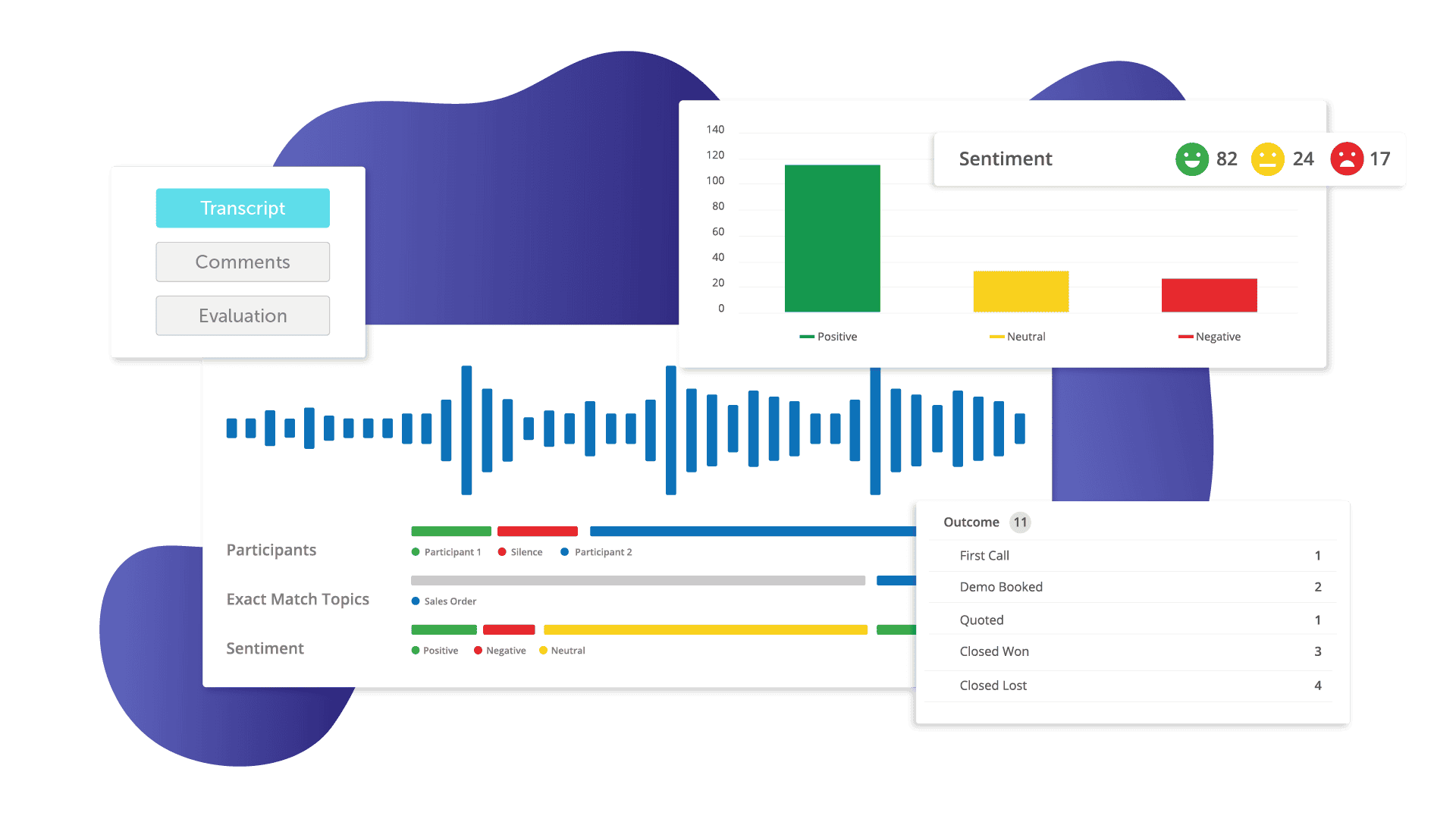
- Compare CSAT data with customer sentiment data: Leverage sentiment analysis tools to identify emotional cues and deeper trends in customer feedback. This can help uncover the emotional aspects of customer interactions that might not be captured in numerical CSAT scores.
- Use artificial intelligence (AI) and analytics for deeper insights: Modern approaches include incorporating CSAT data into omnichannel analytics and using AI sentiment analysis to evaluate customer interactions. These technologies can process large volumes of customer interaction data to identify patterns and insights that might be missed through manual analysis.
- Share insights across the organization: Distribute insights beyond the call center to ensure that stakeholders, sales teams, and decision-makers understand customer feedback and can use it to drive improvements across the organization.
3. Enhance First Call Resolution (FCR) to Drive Higher Satisfaction
First Call Resolution (FCR) is a vital factor in achieving customer satisfaction in call centers. When customers have their issues resolved during their first interaction, they are more likely to give positive feedback about their experience. Enhancing FCR not only improves customer satisfaction scores but also lowers operational costs and increases agent efficiency. To focus on FCR, organizations need to empower their agents, optimize processes, and utilize the right technology.
To further improve your call centers CSAT score, they should look to:
- Train Agents for Comprehensive Problem-Solving:Invest in comprehensive training programs that provide agents with the skills and authority to resolve customer issues during the first interaction. This training should include role-playing, simulations, and current product knowledge, enabling agents to make decisions without unnecessary escalations. High first contact resolution (FCR) rates are closely linked to increased customer satisfaction (CSAT), as customers appreciate quick and effective solutions.
- Maintain a Dynamic Knowledge Base:A centralized, easily searchable knowledge base ensures agents have immediate access Providing accurate information reduces hold times and call transfers. Offering self-service options via the knowledge base can address simple issues without requiring agent intervention, which further enhances customer satisfaction.
- Streamline Call Routing and Workflows:Minimize transfers by using intelligent call routing systems that direct customers to the Identify the most suitable agent or department based on the customer’s inquiry. Clearly assign roles within the team to minimize confusion and empower agents to address a broader range of issues, thereby reducing the need for escalation and enhancing the overall customer experience.
4. Monitor, Analyze, and Act on Customer Feedback Continuously
Collecting CSAT data is only the first step; the real value comes from continuously monitoring, analyzing, and acting on customer feedback. A dynamic feedback loop ensures that call centers remain responsive to customer needs and can proactively address emerging issues. This practice not only sustains high satisfaction levels but also fosters a culture of continuous improvement.
In order to ensure that your call centers CSAT score doesn’t drop off over time, you should:
- Regularly Collect Feedback Across Multiple Channels:Send CSAT surveys through various channels such as SMS, email, and in-app notifications immediately after interactions to capture experiences while they are still fresh. This method boosts response rates and offers timely insights into customer satisfaction.
- Analyze Feedback for Recurring Pain Points:Carefully analyze survey responses and feedback to pinpoint common issues, such as long wait times or unresolved inquiries. Use these insights to prioritize process improvements or targeted training sessions for agents. For instance, if the feedback points to slow resolution times, concentrate on streamlining workflows and empowering agents to resolve issues immediately.
- Communicate Actions Taken Based on Feedback:Inform customers when their feedback leads to changes. This shows that you value their input and are dedicated to continuous improvement, potentially increasing future response rates and overall satisfaction.
What Constitutes a “Good” CSAT Score
CSAT scores typically range from 75% to 85%, which are considered ‘good.’ However, this can vary greatly depending on the context and industry. Few industries consistently meet these targets, underscoring the difficulty of maintaining high customer satisfaction across all interactions.
When evaluating Customer Satisfaction (CSAT) scores, it’s essential to consider two key perspectives:
- Internal Benchmarking: Compare your current scores with past performance to track progress over time. This will help you gauge how well your team is improving in creating better customer experiences.
- External Benchmarking: Compare your scores against industry averages to see how you measure up against competitors. This provides valuable context for your performance within your specific market.
Conclusion
CSAT (Customer Satisfaction) is a fundamental metric for call centers and customer-facing teams that want to understand and improve service quality. Its clarity, immediacy, and specificity make it especially valuable for assessing how customers react to individual interactions. When implemented and interpreted correctly, CSAT can provide actionable insights that lead to meaningful improvements in the customer experience.
To maximize its effectiveness, organizations should combine CSAT with other metrics, utilize advanced analytics to gain deeper insights, and implement targeted strategies to address identified issues. By acknowledging both the strengths and limitations of CSAT, customer service leaders can integrate this metric into a comprehensive approach to measuring and enhancing customer satisfaction.
The most successful organizations don’t just measure CSAT, they act on it. By systematically analyzing CSAT data, identifying patterns, implementing improvements, and continuously monitoring results, call centers can create a virtuous cycle of service enhancement that results in higher satisfaction, greater loyalty, and improved business outcomes.